

Understanding the Car Scrapping Process
When your vehicle reaches the end of its life, scrapping is often the most environmentally responsible way to dispose of it. But what exactly happens to your car once it’s handed over to an authorized dismantler or scrapyard? Here’s a step-by-step look at the process.
Step 1: Arrival and Assessment
Initial Inspection
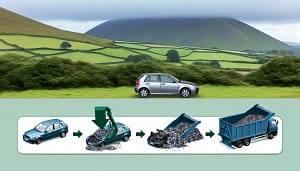
The scrapping process starts with an assessment. The dismantler checks the car’s condition, verifies its paperwork, and removes any hazardous materials like battery acid or fuel.
Step 2: Removal of Valuable Parts
Component Stripping
Usable parts—such as mirrors, alternators, and catalytic converters—are removed and cleaned for resale. Tyres, batteries, and fluids are separated for recycling or safe disposal.
Step 3: Depollution
Safe Disposal of Fluids and Chemicals
Special attention is given to removing oils, coolants, and refrigerants. These are either recycled or treated according to environmental regulations, ensuring no hazardous substances enter the environment.
Step 4: Shredding and Recycling
Breaking Down the Shell
After the valuable components are stripped, the remaining car body is shredded. Powerful machines crush and break down the metal frame for sorting. Ferrous and non-ferrous metals are separated with magnets and other techniques.
Step 5: Material Reuse and Recovery
Turning Waste into Resources
The recovered metals are melted down and reused in manufacturing, while plastics, glass, and rubber are processed for other applications or energy recovery.
Final Thoughts
Scrapping your car isn’t simply about discarding an old vehicle—it’s a carefully managed process aimed at maximizing reuse, minimizing waste, and protecting the environment.